
Introduction
In a small room, a smart speaker does not need to fill a concert hall — it needs to sound clear at low volume, fit on a crowded shelf, and hear you over noise. The wrong choice can mean muffled music, a device that dominates your nightstand, or an assistant that clashes with the apps you already use. Compact smart speakers have become genuinely good: clear vocals, surprising bass, and smart home control in a package smaller than a coffee mug. This guide is a research-based roundup. We have not hands-on tested these speakers ourselves. Our recommendations are based on published specifications, features, and user reviews from owners. We compare sound quality, size, voice assistant, and smart home features, so you can find a speaker that suits your room.
How to Choose a Smart Speaker for Small Rooms
Sound Quality in a Small Space
In a small room, clarity matters more than raw volume. A well-tuned compact speaker sounds rich and clear at conversation level, while an oversized speaker often sounds boomy. Listen for clear vocals and balanced bass, not maximum loudness. User reviews are useful here, because a speaker can still sound thin or harsh on a bedroom shelf. If music matters, look for models with a dedicated woofer or a larger driver.
Size and Placement
A small room leaves little space to spare, so footprint matters. Most compact speakers are under four inches wide and fit on a nightstand, desk, or kitchen shelf. Check the height as well as the width, and think about the power cable. Some models wall-mount, freeing up surface space. A speaker that blends into the room will be used far more than one in the way.
Voice Assistant and Ecosystem
The voice assistant is the heart of a smart speaker, and the best choice usually matches the devices you already own. Alexa works with the widest range of smart home products, Google Assistant suits Android households, and Siri is the natural fit for iPhone users. Switching assistants later means replacing the speaker, so choose the ecosystem first and the speaker second. Also check that your music services work with the assistant you pick.
Smart Home Features
Some compact speakers also control lights, plugs, locks, and thermostats with a voice command. Higher-end models include a built-in smart home hub, which connects devices directly without a separate hub box. A temperature sensor can trigger simple routines, such as turning on a fan when the room warms up. If you have no smart home devices yet, these features are a bonus for later.
Our Picks
Amazon Echo Dot (5th Gen)
The Echo Dot (5th Gen) is the best all-round speaker for small rooms. It is small enough for any nightstand, yet its sound is clearer and fuller than older compact speakers. Alexa controls a huge range of smart home devices, and the temperature sensor enables simple routines. It is one of the most affordable speakers here. For most bedrooms, dorms, and small apartments, it is the safest choice.
Pros:
- Clear, full sound for its compact size
- Alexa works with a wide range of devices
- Budget-friendly pricing with frequent discounts
Cons:
- No built-in smart home hub
- Bass is limited at high volume
Amazon Echo Pop
The Echo Pop is the cheapest Alexa speaker for a small room. Its half-sphere design is smaller than a coffee mug, and it comes in bright colours for bedrooms and dorms. Sound is a step below the Echo Dot, but it is plenty for voice commands, podcasts, and casual music. For smart home control on the tightest budget, or a second speaker for another room, the Pop is the easiest way in.
Pros:
- Smallest and most affordable Alexa speaker
- Fits easily on crowded shelves and nightstands
- Simple setup with voice control of smart devices
Cons:
- Thin sound with weak bass
- Microphone is less sensitive than the Dot
Google Nest Mini
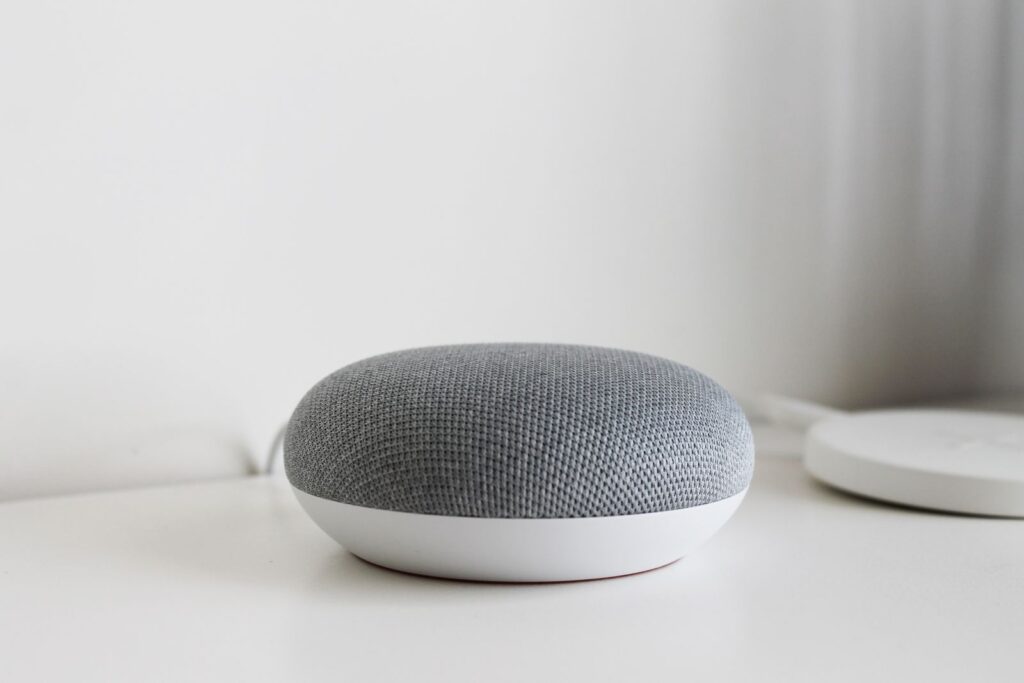
The Google Nest Mini is the best compact speaker for households that use Google services. It is barely larger than a coaster, mounts on a wall, and answers questions with Google’s search behind it. Sound is clear for voice and podcasts, though it is quieter than the Echo Dot for music. It pairs naturally with Android phones and Google Home routines — the obvious pick for Google-centred homes.
Pros:
- Compact design with a wall-mount option
- Strong answers powered by Google search
- Works naturally with Android and Google services
Cons:
- Quieter than the Echo Dot for music
- Fewer smart home partnerships than Alexa
Google Nest Audio
The Google Nest Audio is the pick where music matters most. Its larger body holds a woofer and a tweeter that produce fuller sound than the Mini, with clearer vocals and more bass, while still fitting on a shelf. Google Assistant handles questions and routines, and two speakers pair for stereo sound. It costs more than the Mini, but the upgrade is easy to hear.
Pros:
- Fuller, richer sound than smaller speakers
- Clear vocals with stronger bass
- Stereo pairing with a second speaker
Cons:
- Larger footprint than the Mini
- Mid-range pricing above budget picks
Apple HomePod mini
The HomePod mini is the choice for Apple households. It is compact, sounds better than its size suggests, and integrates tightly with Siri and Apple Music. Intercom sends voice messages between rooms, and it acts as a smart home hub for Apple HomeKit devices. Sound is balanced and clear, though it works best within Apple’s ecosystem. If your phone, watch, and music all come from Apple, this is the speaker to buy.
Pros:
- Excellent sound for a compact speaker
- Deep integration with Apple devices and Siri
- Acts as a hub for Apple HomeKit devices
Cons:
- Best only within the Apple ecosystem
- Premium pricing for its size
Sonos Era 100
The Sonos Era 100 is the premium sound pick here. Despite its compact size, it delivers balanced stereo sound with deep bass. It supports Alexa and Sonos Voice Control, works with AirPlay 2, and pairs with other Sonos speakers. It is the most expensive model here, and it lacks a built-in smart home hub, but for listeners who care most about sound quality, it is the standout choice.
Pros:
- Best sound quality of any speaker here
- Balanced stereo with deep bass
- Multi-room audio with other Sonos speakers
Cons:
- Premium pricing compared with rivals
- No built-in smart home hub
Frequently Asked Questions
How loud should a smart speaker be for a small room?
For a bedroom or small living room, a compact speaker is loud enough. Most small rooms need clear sound at low to medium volume. A speaker that sounds good at conversation level is more useful than a loud one that distorts, so prioritise clarity over wattage.
Do I need a smart home hub built in?
Not necessarily. A built-in hub lets a speaker connect directly to lights, plugs, and locks without extra hardware, which is handy in a small space. If you only use Wi-Fi smart devices, or have no smart home gear yet, a speaker without a hub works just as well for music and voice commands.
Can a smart speaker work without Wi-Fi?
No, a smart speaker needs Wi-Fi for almost everything, including questions, streaming, and smart home control. Bluetooth can play music from a phone on some models, but voice commands and streaming will not work until the speaker is back online.
Which voice assistant is best for a bedroom?
It depends on the devices you use. Alexa offers the widest smart home compatibility, Google Assistant gives strong answers for Android users, and Siri fits best with iPhones. For a bedroom, consider a model with a clock display or a gentle alarm, which can replace a bedside clock.
Conclusion
The best smart speaker for a small room sounds clear at low volume, fits your space, and speaks the same language as the devices you already own. The Echo Dot is the safest all-round choice for most rooms, while the Echo Pop covers tight budgets and the Nest Mini suits Google homes. Music lovers should pick the Nest Audio or the Sonos Era 100, and Apple users will get the most from the HomePod mini. Start with your ecosystem, check the size against your shelf or nightstand, and choose the speaker you will enjoy using every day.